
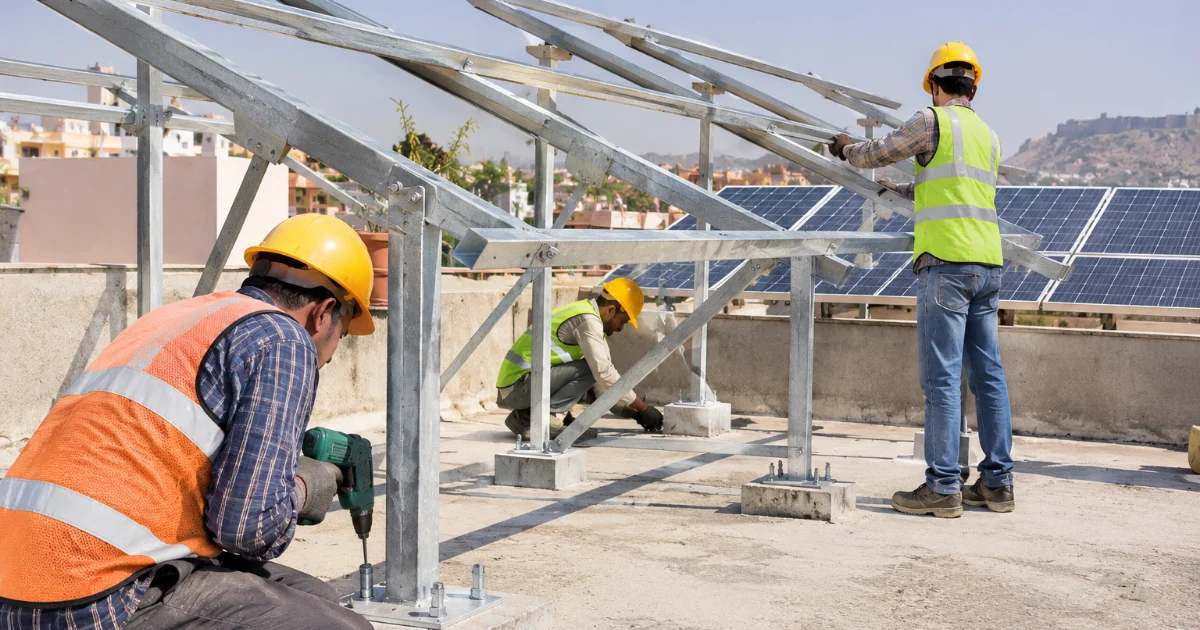
Solar panels last 25 years or more, but they are only as safe as the structure holding them. Strong winds, dust storms and corrosion can damage poorly designed mounting structures, putting panels, roofs and people at risk. Choosing the right mounting system is one of the most important decisions in any rooftop or ground-mounted solar project.
1. Types of mounting structures
- RCC flat roof structures: elevated frames fixed with anchor bolts or ballast.
- Metal sheet (tin shed) roof structures: rails clamped or fixed to roof purlins.
- Ground-mounted structures: frames on concrete or driven pile foundations.
- Elevated or carport structures: higher frames that allow use of the space below; see our solar carport guide.
2. Materials and corrosion protection
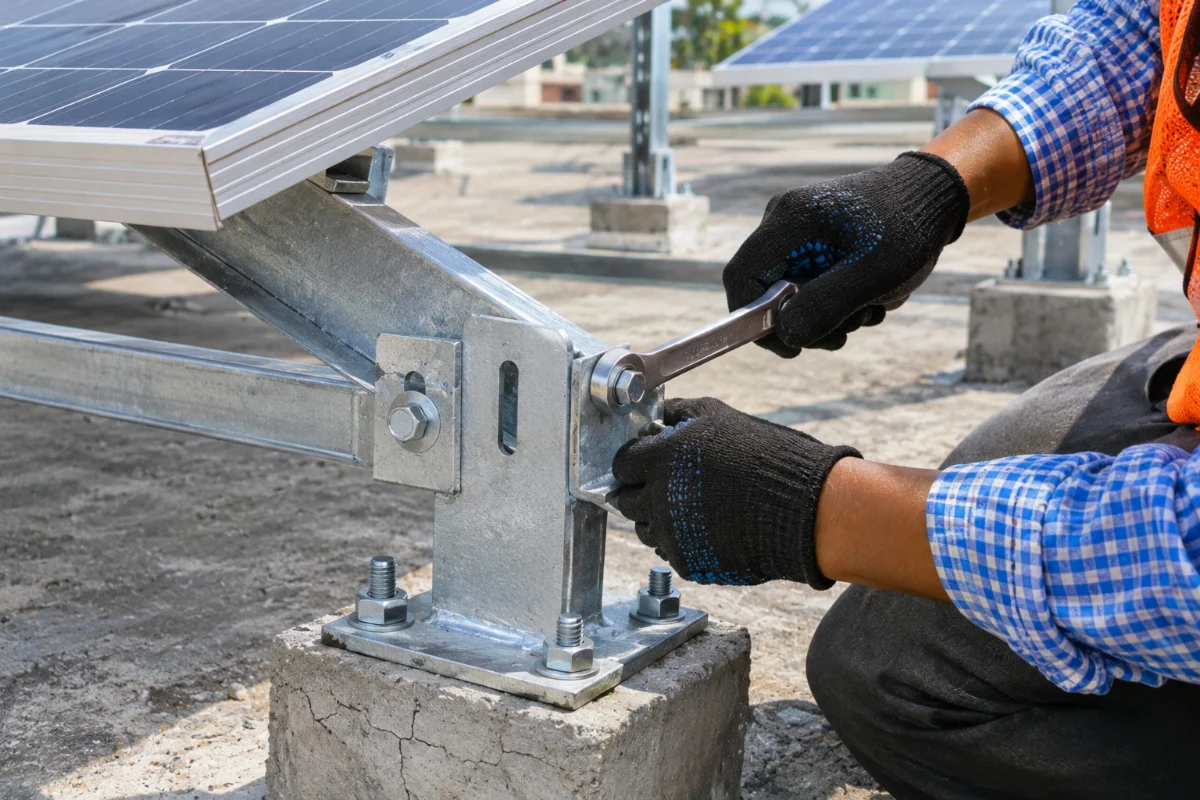
Most structures use hot-dip galvanised steel or aluminium. Galvanised steel is strong and widely used; the thickness of the zinc coating affects corrosion resistance over the plant’s life. Aluminium is lighter and naturally corrosion-resistant but costs more. Fasteners should be stainless steel or suitably coated, and dissimilar metals must be isolated to avoid galvanic corrosion.
3. Tilt, orientation and height
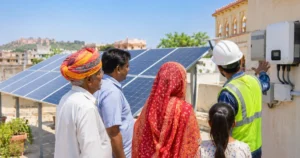
In Rajasthan, panels generally face south with a tilt chosen to balance annual generation, wind load and cleaning ease. Elevated structures on homes provide usable space and airflow below panels, which helps keep them cooler. Our rooftop system size guide explains how available roof area affects design.
4. Designing for wind
Structures must be designed for the wind speeds applicable to the site as per Indian standards, considering building height and exposure. Proper anchoring to RCC roofs, adequate bracing and correct bolt torque are essential. Ballasted systems need careful calculation of weight and roof load capacity. Ask your installer for structural design details, not just a price per kilowatt.
5. Protecting the roof
- Avoid damaging the roof waterproofing when drilling anchors; seal penetrations properly.
- Check that the roof can carry the additional load.
- On metal roofs, use proper clamps and sealing to prevent leaks.
- Keep walkways for safe cleaning and maintenance.
Roof waterproofing basics are explained by ATTPL Infra.
6. Choosing an installer for structure quality
Mounting structures are often where low-cost installations cut corners, using thin sections, poor galvanising or inadequate anchoring. When comparing quotes, ask for the structural design basis, section sizes, coating thickness, fastener specifications and anchoring method. Ask to see previous installations that have been through a few monsoons and summers. A slightly higher price for a properly designed structure is a small part of total system cost and protects the whole investment.
- Request structural drawings before installation.
- Check galvanising and fastener quality on delivery.
- Inspect anchoring and sealing before panels are fixed.
7. Ground-mounted plant foundations
For ground-mounted systems, foundations may be concrete pedestals, pile foundations or ballast blocks, depending on soil and wind conditions. A soil test guides the choice. Good drainage around foundations prevents erosion during heavy rain, and access paths make cleaning and maintenance easier.
8. Inspection and maintenance
Inspect structures at least once a year and after major storms: check for loose bolts, rust, cracked foundations and bent members. Combine this with panel cleaning; see our cleaning and maintenance guide. Warranty terms for structures should be clear in the contract, as explained in our warranty and AMC guide.
Frequently asked questions
Which is better for solar structures: galvanised steel or aluminium?
Both are used. Galvanised steel is strong and economical; aluminium is lighter and corrosion-resistant but costs more. Design quality matters most.
How high should a rooftop solar structure be?
It depends on roof use, cleaning access and wind design; elevated structures allow use of space below but need stronger design.
Can solar structures damage the roof?
Poorly sealed anchors can cause leaks. Proper installation and sealing protect the roof.
Do mounting structures need a separate warranty?
Ask the installer for warranty terms covering the structure and workmanship, as they may differ from panel and inverter warranties.
Sources
Planning a rooftop or ground-mounted solar system? Contact ATTPL Solar.

Pingback: Rooftop Solar Shading Analysis and Site Survey | ATTPL Solar
Pingback: Solar Earthing & Lightning Protection Guide | ATTPL Solar