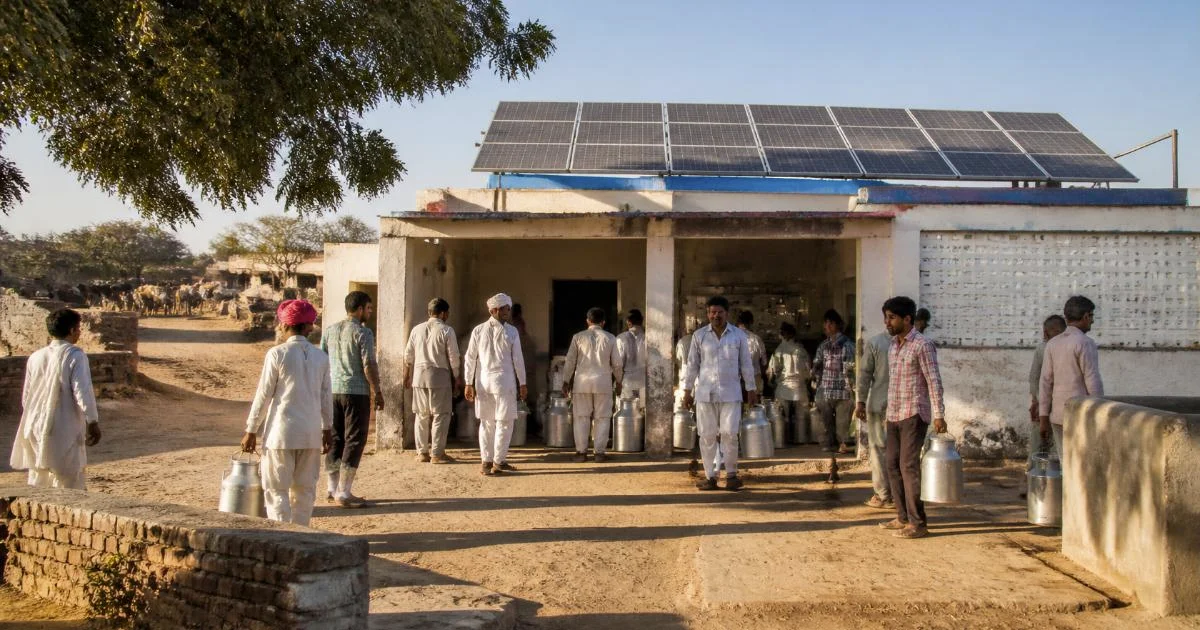
Village milk collection centres and bulk milk cooling units in Rajasthan depend on reliable power to keep milk cold. Power cuts and voltage fluctuations force many centres to run diesel generators, which adds fuel cost and noise, and any delay in chilling affects milk quality. Solar power, with the right storage, can keep chillers running through the day and cut generator use sharply.
1. Where the power goes
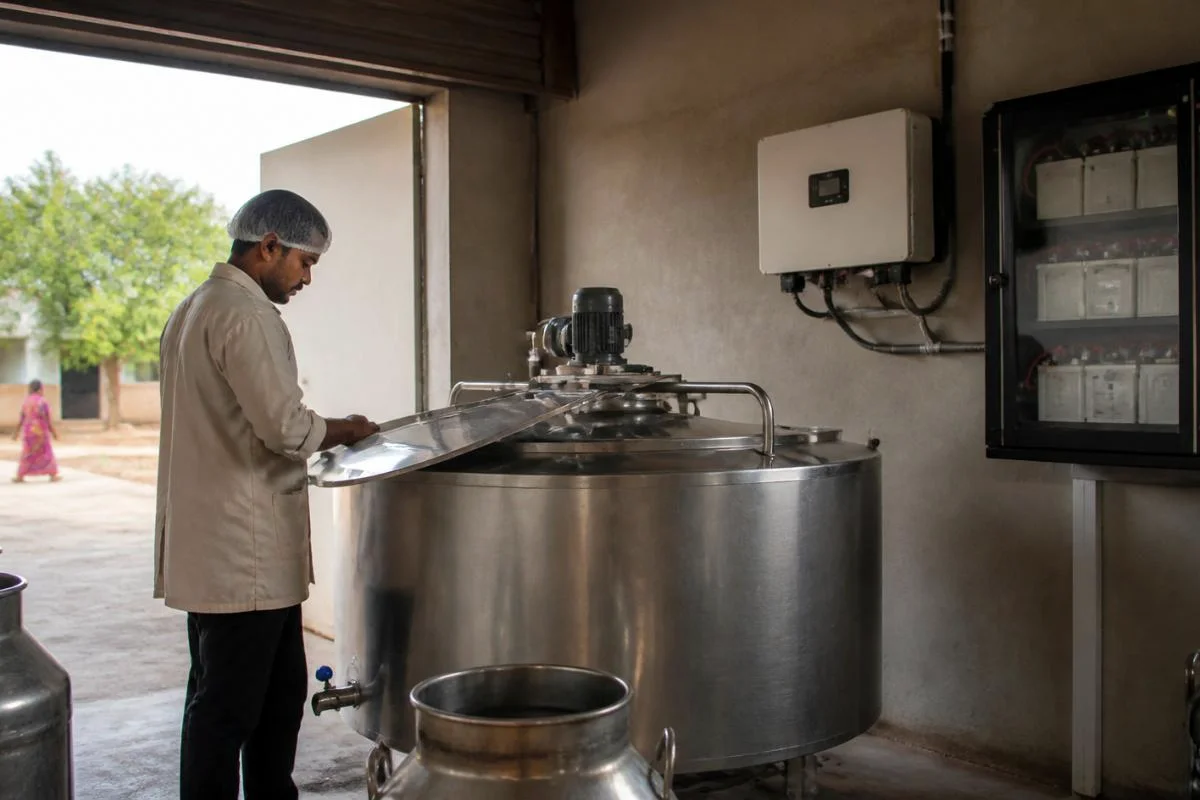
- Bulk milk cooler compressor and agitator
- Milk analysers, weighing scales and computers for payment records
- Lights, fans and water pumps for cleaning
- Mobile charging and internet devices for data upload
The chiller is the largest load, and it runs hardest right after the morning and evening collections, when warm milk arrives. Milk is generally cooled to around 4°C as quickly as possible to keep bacterial growth in check.
2. System options
- Grid-connected solar with net metering: suits centres with a fairly reliable grid; reduces bills but does not run during a power cut unless designed as hybrid
- Hybrid solar with battery: runs critical loads, including the chiller, during outages; batteries store daytime energy for the evening collection
- Solar with thermal storage: some chillers store cooling as ice or chilled water during the day and use it to cool evening milk, reducing battery size
- Solar with diesel generator backup: the generator becomes an emergency source rather than a daily one
Our guides on solar battery storage and inverter types explain these choices.
3. Sizing the system
- Record the chiller’s rated power, daily running hours and starting current
- Note the timing of collections and how long power cuts usually last
- Check roof area or open land near the centre for panels
- Choose an inverter that can handle the compressor’s starting surge
- Size batteries for the evening collection and expected outage hours
A detailed energy audit by a solar engineer is the best way to size the system. Oversizing wastes money, while undersizing leaves the chiller dependent on the generator.
4. Design tips for dairy sites
- Keep inverters and batteries in a ventilated, shaded room away from washing areas and moisture
- Use proper earthing and surge protection, especially at remote sites prone to lightning
- Raise panel structures so cattle and vehicles cannot damage them, and fence the array
- Plan regular panel cleaning, as dust builds up quickly in Rajasthan
- Use remote monitoring so the dairy union or owner can see generation and battery health
5. Benefits beyond the bill
Steady chilling improves milk quality and reduces rejection. Less generator use means lower fuel spending and fewer breakdowns. For dairy cooperatives and private dairies with many centres, a standard solar design can be repeated across villages. For produce that needs cold rooms, see our solar cold storage guide, and for dairy business planning and financing, ATTPL Finance can help. ATTPL Agritech works with farmers on related rural projects.
Frequently asked questions
Can a milk chiller run only on solar without batteries?
Only during strong sunlight and with a suitable inverter or a chiller designed for direct solar use. Most centres need storage, either batteries or thermal storage, for the evening collection.
How should panels be maintained at a dairy site?
Clean them regularly with clean water, check connections and keep animals away from the array. A maintenance contract makes this easier.
Are there government schemes for dairy solar?
Support schemes for dairy infrastructure and renewable energy change over time. Check with your dairy union, the state energy department and the Ministry of New and Renewable Energy for current options.
Planning solar for a dairy or collection centre? Contact ATTPL HOLDCO.
Sources
This article is general information, not professional advice. Please get a site-specific design from a qualified solar engineer.